SLIDING DOOR SECURITY
Security Screens for Sliding Glass Doors: What Phoenix Homeowners Need to Know
The most vulnerable door on your home, hardened the right way — without losing the view, the light, or the breeze
Almost every modern Phoenix home has at least one sliding glass door — to the patio, the pool deck, or the backyard. They are great for natural light and indoor-outdoor living, and they are also, by a wide margin, the most vulnerable entry point on the typical Arizona home.
If you are weighing how to harden a slider, here is what actually matters: how the door fails, what a real security screen slider does differently, and what to look for when comparing options.
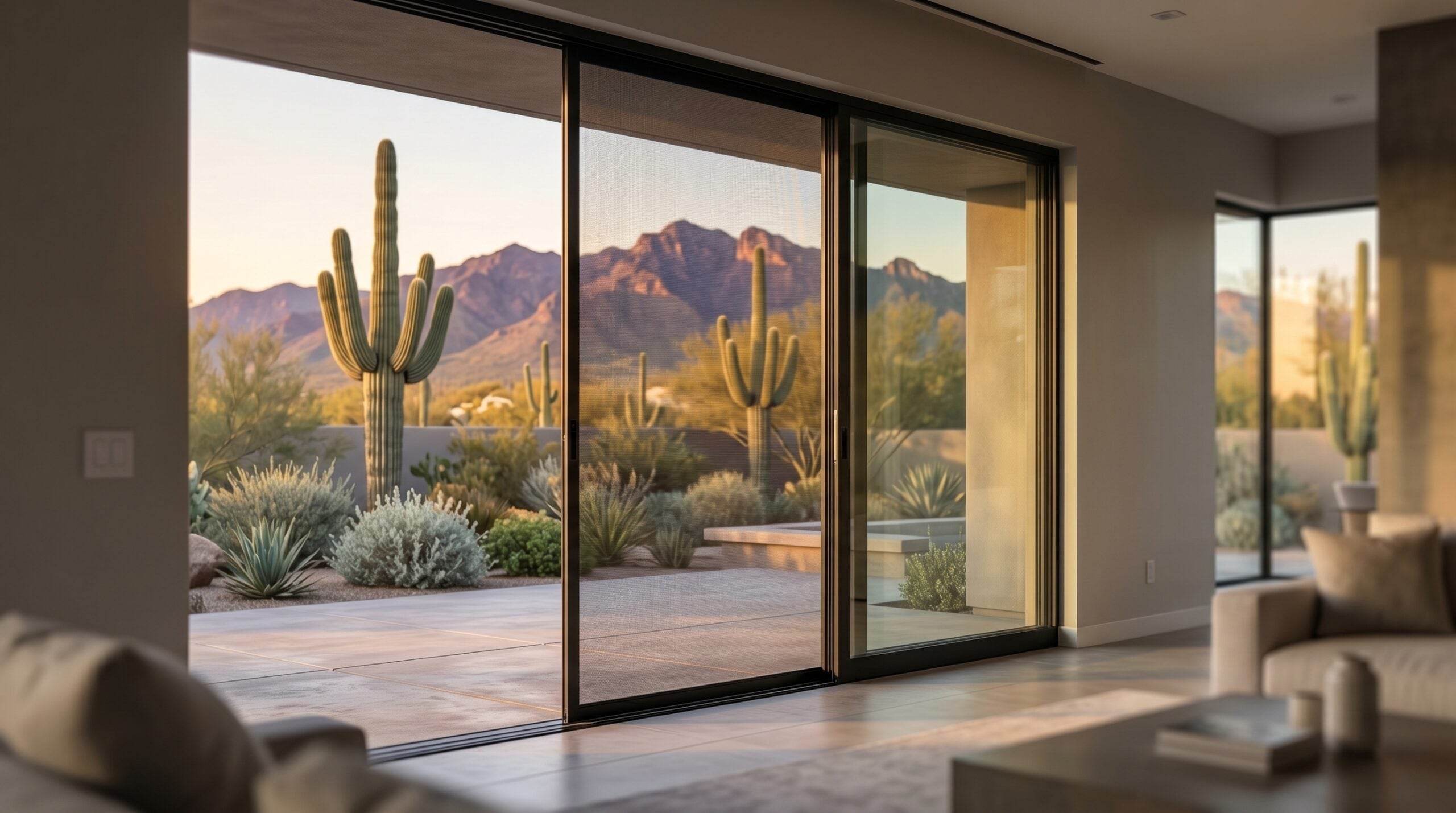
A Phoenix patio with a security screen slider in place. The mesh is nearly invisible from inside, and the glass door can stay open behind it for airflow.
22%
Of residential break-ins enter through a back or side door — sliders top the list
3-pt
Locking points on a quality security screen slider — vs. a single hook on a stock unit
60%+
Solar heat gain blocked by stainless mesh — slide the glass open and stay cool
Why Stock Sliding Glass Doors Are So Easy to Defeat
Sliders look substantial. They are usually large, heavy, and made of glass thick enough to feel secure. But the standard hardware is one of the weakest points on the entire home:
- The single-point latch. Most stock sliders use a small lever that hooks into a strike on the jamb. A pry bar applied at the right point can pop that hook in seconds.
- The lift-out failure. Many sliders can be physically lifted out of their tracks from outside. Burglars do not need to defeat the lock at all if they can lift the panel off.
- Vulnerable glass. Tempered glass shatters into small chunks rather than blocking entry — kicking through is common.
- Predictable position. Sliders are almost always at the back of the home, away from the street, behind a fence, where someone can work uninterrupted.
In Phoenix specifically, sliders are also routinely left unlocked or cracked open for airflow during cooler evenings — which converts a hardened door into an open invitation.
How a Real Security Screen Slider Works
A purpose-built security screen slider is not a beefed-up insect screen. It is a separate, dedicated barrier that runs in its own track in front of (or behind) the existing glass slider. The structural elements are different in three important ways:
1. The mesh. Marine-grade stainless steel woven into a tight, knife-resistant pattern. It blocks blades, crowbars, and projectiles, while staying nearly transparent for views and airflow.
2. The frame. Heavy aluminum extrusion — significantly stiffer than a standard screen frame — with internal reinforcement at the corners and lock points.
3. The locking system. Multi-point locks that engage at the top, bottom, and middle of the door. Even if one point is compromised, the door stays in place.
The result: a slider that opens and closes like a normal screen door, lets you keep the glass slider open for airflow, but actively resists forced-entry attempts the same way the rest of a Paramount system does.
What to Look For on a Phoenix Slider Install
Not every product marketed as a “security slider” is built to the same standard. Before signing off on an install, confirm the system includes:
- Stainless steel mesh, not aluminum or fiberglass. Aluminum mesh fails to a sharp blade. Stainless does not.
- Anti-lift hardware. Engineered tracks and stops that prevent the panel from being lifted out of position from outside.
- Three-point locking. A single lock point is the weakest link on any slider. Three-point hardware spreads the load.
- Welded or mechanically reinforced corners. Glued or stapled corners pop apart under impact.
- A keyed handle option. Some homeowners want to lock the slider from outside; some don’t. The system should support both.
- Color-matched powder coating. The screen should disappear into your home’s exterior — black, bronze, white, or custom-matched.
Skipping any of these turns a security upgrade into an expensive cosmetic one.
💡 Phoenix Tip: Use the Slider for Airflow
One of the most underrated benefits of a security screen slider is that you can leave the glass door wide open on cool spring and fall evenings without exposing the home. The screen takes the security role; the glass goes off duty. For most Phoenix homeowners, that adds dozens of comfortable, AC-free evenings every year.
The Heat & Airflow Bonus
In Phoenix, a sliding glass door is also one of the biggest sources of solar heat gain in the home. South- and west-facing patio doors can turn the adjacent living area into an oven from late spring through mid-fall.
A stainless steel security mesh blocks 60 percent or more of solar heat gain on average. Two practical results for a Phoenix home:
- The room next to the slider stays measurably cooler with the screen in place
- The AC system runs less to keep that zone comfortable, lowering monthly bills
Add the ability to slide the glass open behind the screen during cool hours, and a single security slider quietly contributes to year-round comfort and energy savings — on top of the security upgrade.
DIY vs. Professional Install in Arizona
Big-box “security screen kits” are tempting, but they almost always sacrifice the things that make a security slider actually secure: the heavy frame, the multi-point lock hardware, and the precision fit in your specific door track.
Professional install matters because:
- Custom measurement. Phoenix homes have wildly different slider dimensions. A 1/8″ gap at the top is enough to defeat a multi-point lock.
- Track integration. Anti-lift hardware has to be set into the track correctly to do its job.
- Frame anchoring. The screen frame needs to be mechanically fastened into structure, not just pressure-fit into the existing door opening.
- Warranty & ROC license. Arizona ROC-licensed installers (we hold ROC #353818) carry the insurance and warranty backing that a DIY kit cannot match.
For a slider — the single most-targeted door on the home — the case for a professional install is straightforward.
Common Questions
“Will it block my view of the backyard or pool?”
No. The mesh is woven tightly enough to stop a blade but appears nearly transparent from inside. From the curb, it disappears into the door frame.
“Can I still use the existing slider’s lock?”
Yes. The security screen runs independently — the original glass slider keeps its function and lock, and you gain a hardened second barrier.
“What about pets and kids?”
Stainless mesh stands up to dog scratches and kid impact far better than standard fiberglass screens. We can also install a pet door if needed without compromising the security rating.
“How long does install take?”
Most single-slider installs are completed in a few hours. Multi-door homes typically wrap in a day.
Lock Down the Most Vulnerable Door on Your Home
Paramount Security Screens builds custom, ROC-licensed security screen sliders for every patio door style across the Phoenix metro. Free in-home measurement and quote.
Call us: (602) 214-7005 | Licensed & Insured | ROC #353818
Explore More From Paramount Security Screens
- our security screen products
- residential security screens
- professional installation services
- Security screens in Peoria & Gilbert, AZ