HOA & SECURITY SCREENS
Are Security Screens HOA-Approved in Arizona? What Phoenix Homeowners Need to Know
The short answer surprises most homeowners — and the approval process is easier than you think
If you live in one of the Phoenix metro’s thousands of HOA neighborhoods, you have probably had the same thought: “I’d love a security screen door, but my HOA will never allow it.” It is the single most common reason homeowners talk themselves out of a security upgrade that’s genuinely worth it before they ever pick up the phone.
Here is the good news. In the vast majority of cases, yes — security screens can be installed in an Arizona HOA community, and modern architectural security screens are specifically designed to sail through architectural review. Below is exactly how HOA approval works in Arizona, what your association can and cannot do, and the step-by-step path to a yes.
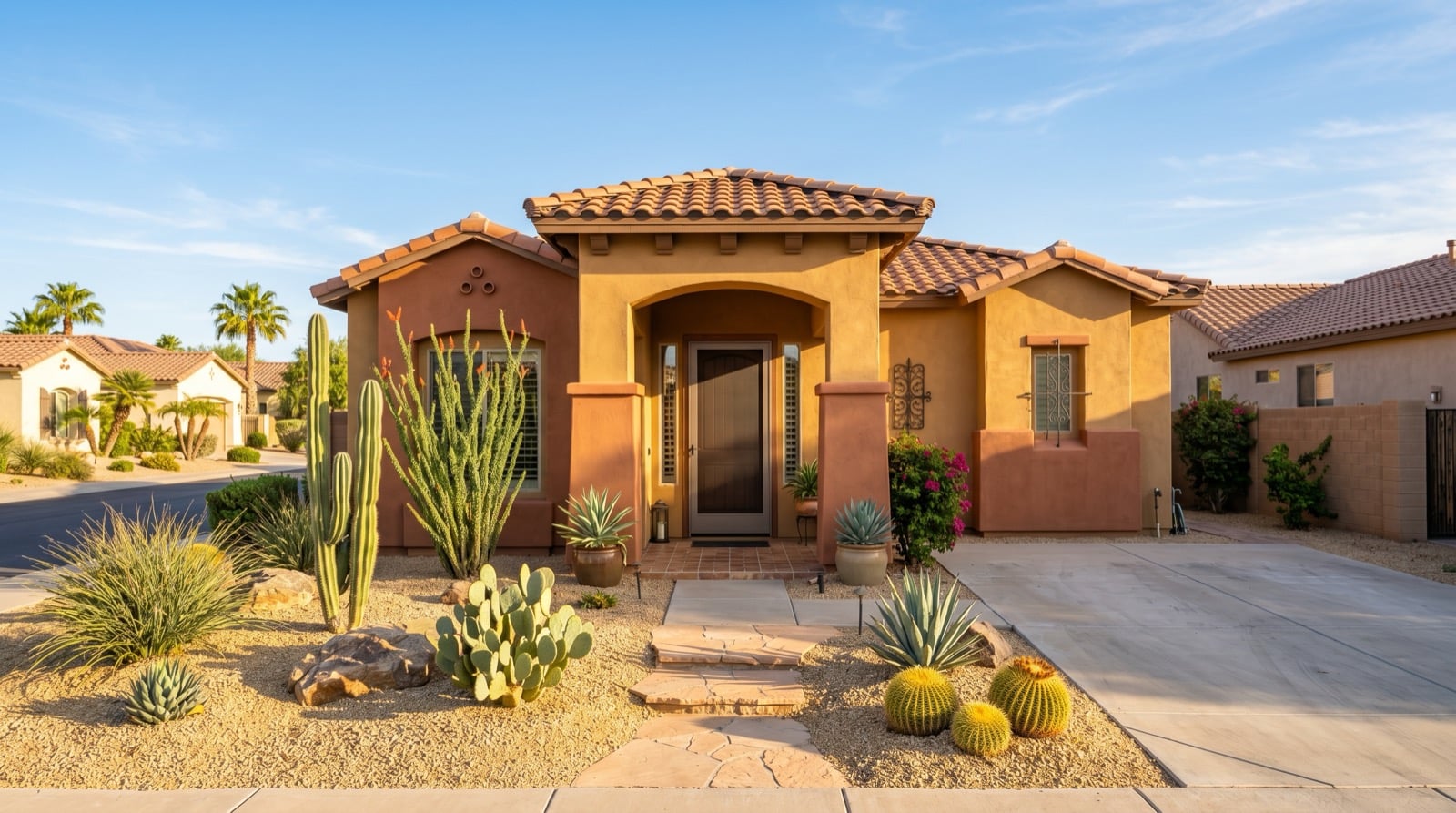
A security screen door color-matched to the home’s trim. From the curb it reads as a standard screen door — exactly what an architectural committee wants to see.
9,000+
HOAs operate across Arizona — most Phoenix-metro neighborhoods are governed by one
30–45
Days is the typical architectural-review turnaround written into most Arizona CC&Rs
$0
Cost to submit an architectural request in most communities — approval is usually free
Why Homeowners Assume the Answer Is “No”
The fear is rooted in an outdated mental image. When people picture “security screens,” they often think of the bulky, prison-bar look of 1980s burglar bars or black wrought-iron security doors that clash with everything around them. That image would get rejected by most architectural committees — and rightly so.
But that is not what a modern security screen looks like. Today’s architectural security screens use a fine stainless steel mesh in a slim, powder-coated frame that can be matched to your home’s existing trim color. From the street, they read as an ordinary screen door or window screen. That single design shift is why approvals that used to be a fight are now routine.
What an HOA Actually Cares About
An architectural committee is not in the business of stopping you from being safe. Its job is to protect property values by keeping the neighborhood visually consistent. Reviewers are looking at three things:
- Color. Does the frame match or complement the home’s existing trim, door, and fascia colors? A bronze or white frame on a matching house is an easy yes.
- Visible profile. Is it slim and unobtrusive, or does it look like an aftermarket cage bolted onto the front of the house?
- Consistency. Is the product in keeping with what is already present elsewhere in the community?
Notice what is not on that list: whether the door makes your home more secure. Once a screen clears the aesthetic bar, the security benefit is yours to keep — which is exactly why color-matched, low-profile screens get approved.
What Arizona Law Says About HOA Restrictions
Arizona HOAs are governed by the Arizona Planned Communities Act (A.R.S. Title 33, Chapter 16). Within that framework, an association generally can set design standards through its CC&Rs — and it can require you to get approval before changing the exterior of your home.
But that power is not unlimited. Two principles work in a homeowner’s favor:
- HOAs must act reasonably. Arizona courts have consistently held that an association must exercise its architectural authority fairly, in good faith, and without arbitrary or selective enforcement. It cannot deny a slim, color-matched security screen on a whim while approving similar products for other owners.
- The liability angle cuts both ways. An association that flatly forbids reasonable security measures takes on real risk. If a homeowner is denied a security door and a break-in follows, the HOA can find itself exposed — a reality that makes most boards far more cooperative than homeowners expect.
This is general information, not legal advice — your specific CC&Rs and architectural guidelines control. Always read your community’s rules or ask the management company before you submit.
How to Get Your Security Screens Approved: Step by Step
1. Pull your CC&Rs and architectural guidelines. Look for any language on doors, screens, security devices, and exterior colors. Most communities post these on their portal or will email them on request.
2. Choose a color-matched, low-profile product. This is the single biggest factor in approval. Match the frame to your trim and keep the profile slim. (Curious what that runs? See our Phoenix security screen cost guide.)
3. Submit an Architectural Review (ARC) request. This is usually a short form plus a photo of your home and a product spec sheet or rendering showing the finish color. Most communities charge nothing to submit.
4. Wait for the review window. Most Arizona CC&Rs require the committee to respond within roughly 30 to 45 days. In many associations, no response within the stated window counts as approval — check your governing documents.
5. Keep the written approval. File the approval email or letter with your home records so there is never any question down the road.
💡 Phoenix homeowner tip: Submit a spec sheet that names the exact frame color (for example, “bronze” or “white”) alongside a photo of your home’s existing trim. Committees approve faster when they can see at a glance that the screen will blend in rather than stand out.
How Paramount Makes HOA Approval Easy
We install across the Phoenix metro’s HOA communities every week, so we know what gets approved — and we build for it from the start:
- Color-matched frames. We powder-coat to match your trim so the screen reads as part of the home, not an add-on.
- Low-profile architectural designs. Slim frames and near-invisible stainless mesh that committees approve without a second look — for entry doors, windows, and sliding glass doors alike.
- Documentation for your ARC packet. We provide the spec sheets, finish samples, and product details your committee needs to say yes.
- Local, ROC-licensed install. Arizona ROC #353818, fully licensed and insured, with the warranty backing a DIY kit can’t match.
Bring us your CC&Rs and we will help you spec a screen designed to pass — so you get the protection without the pushback.
Common Questions
“Can my HOA legally stop me from installing a security screen?”
An HOA can set design standards through its CC&Rs, but it must apply them fairly and reasonably. It generally cannot reject a slim, color-matched security screen arbitrarily — especially when similar products exist elsewhere in the community.
“Do I need approval before installing?”
In most Arizona HOA communities, yes — any exterior change typically requires an Architectural Review (ARC) request first. The submission is usually free and the review window is around 30 to 45 days.
“What gets a security screen rejected?”
Almost always the look, not the function. A bulky, dark, cage-style product clashing with the home is the usual culprit. A color-matched, low-profile architectural screen rarely is.
“Will you help with the HOA paperwork?”
Yes. We provide the spec sheets, finish color, and product documentation your committee needs, and we build the screen to match your trim so it’s designed to pass.
Get HOA-Friendly Security Screens for Your Phoenix Home
Paramount Security Screens builds custom, color-matched, ROC-licensed security screens designed to pass HOA architectural review across the Phoenix metro. Free in-home measurement and quote — bring us your CC&Rs.
Call us: (602) 214-7005 | Licensed & Insured | ROC #353818