PHOENIX METRO
Patio Enclosures
Screened patio and courtyard enclosures in 316 marine-grade stainless steel. Turn a patio you walk past into a room you actually use.
A patio enclosure is a framed screen system that closes in a covered patio, courtyard or porch, turning an open slab into a secured, shaded room that still breathes. Paramount builds them in the same 316 marine-grade TAPCO mesh we use on doors and windows, welded into powder-coated frames, measured on site and installed by our own certified employees. In the Valley an enclosure earns its keep three ways at once. It secures the largest opening on most houses, it keeps dust, leaves and insects out of a space you paid to cover, and it takes real heat load off the back of the house. Every enclosure carries the same Lifetime Warranty as the rest of our work.
A covered patio is usually the biggest single opening a Phoenix home has, and it is almost always the least protected. It sits behind a block wall, out of sight of the street, with a slider or a set of French doors as the only real barrier. Enclosing it moves that whole boundary out to the patio edge.
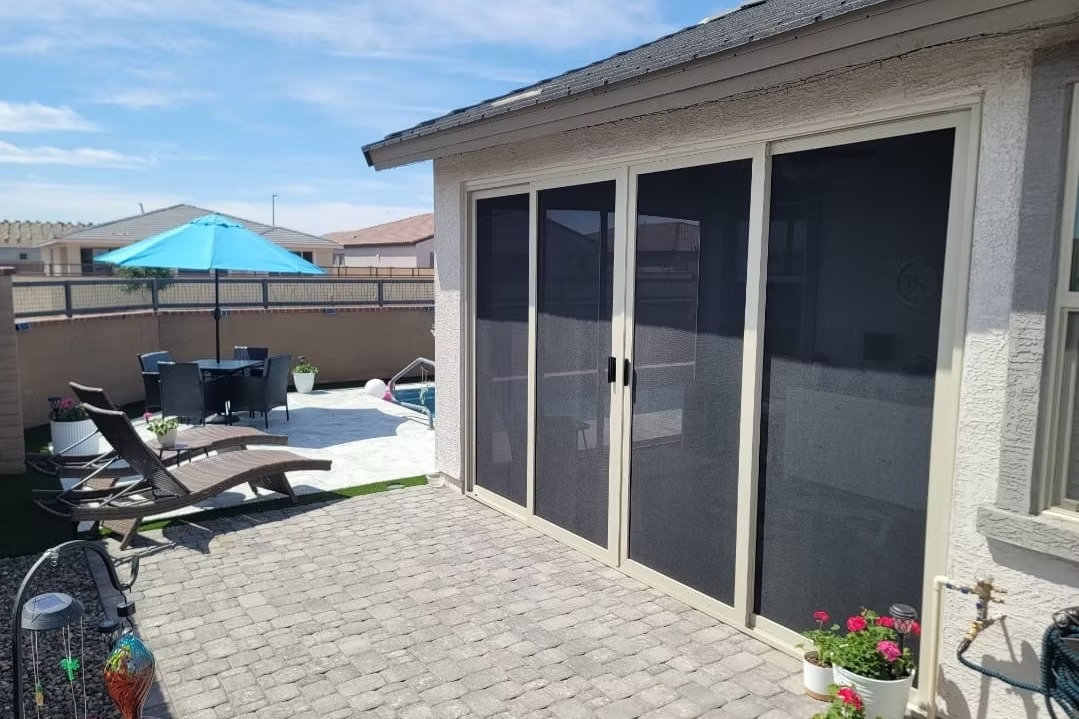
What we enclose
Enclosures are the most site-specific work we do. Post spacing, roof line, slab edge and whether the space is already under cover all change the build, which is why every one starts with a measure rather than a price list.
Common enclosure types
Covered rear patios. The standard Valley back patio, already roofed, screened in between the existing posts.
Front courtyards. Very common west of Phoenix. Enclosing the courtyard secures the front entry and the windows inside it in one move.
Extended and wrap-around patios. Multiple bays and corner posts, where the frame has to carry the span without sagging.
Pool-side enclosures. Screened areas next to a pool deck, where mesh and frame both have to tolerate chlorine and constant sun.
Ramadas and detached covers. Freestanding structures screened on three or four sides.

What an enclosure actually does in an Arizona summer
It makes the space usable again
Most covered patios in the Valley go unused for a good part of the year. Shade alone does not solve it, because what drives people back inside is glare, blowing dust and insects. A screened enclosure addresses all three, which is the difference between a slab you cross to reach the yard and a room you sit in.
It takes load off the back of the house
Screening the patio puts a second barrier in front of the glass on the shaded side of the house. That matters most on west-facing elevations through the afternoon. The same principle applies at every opening, and we cover it in keeping an Arizona home cool and protected through summer.
It holds up through monsoon season
Blowing debris is the real test in July and August. Marine-grade mesh in a welded frame handles that differently than a vinyl or aluminum screen room does, and it does not need taking down and putting back each year. We compare the approaches in security screens versus storm shutters.
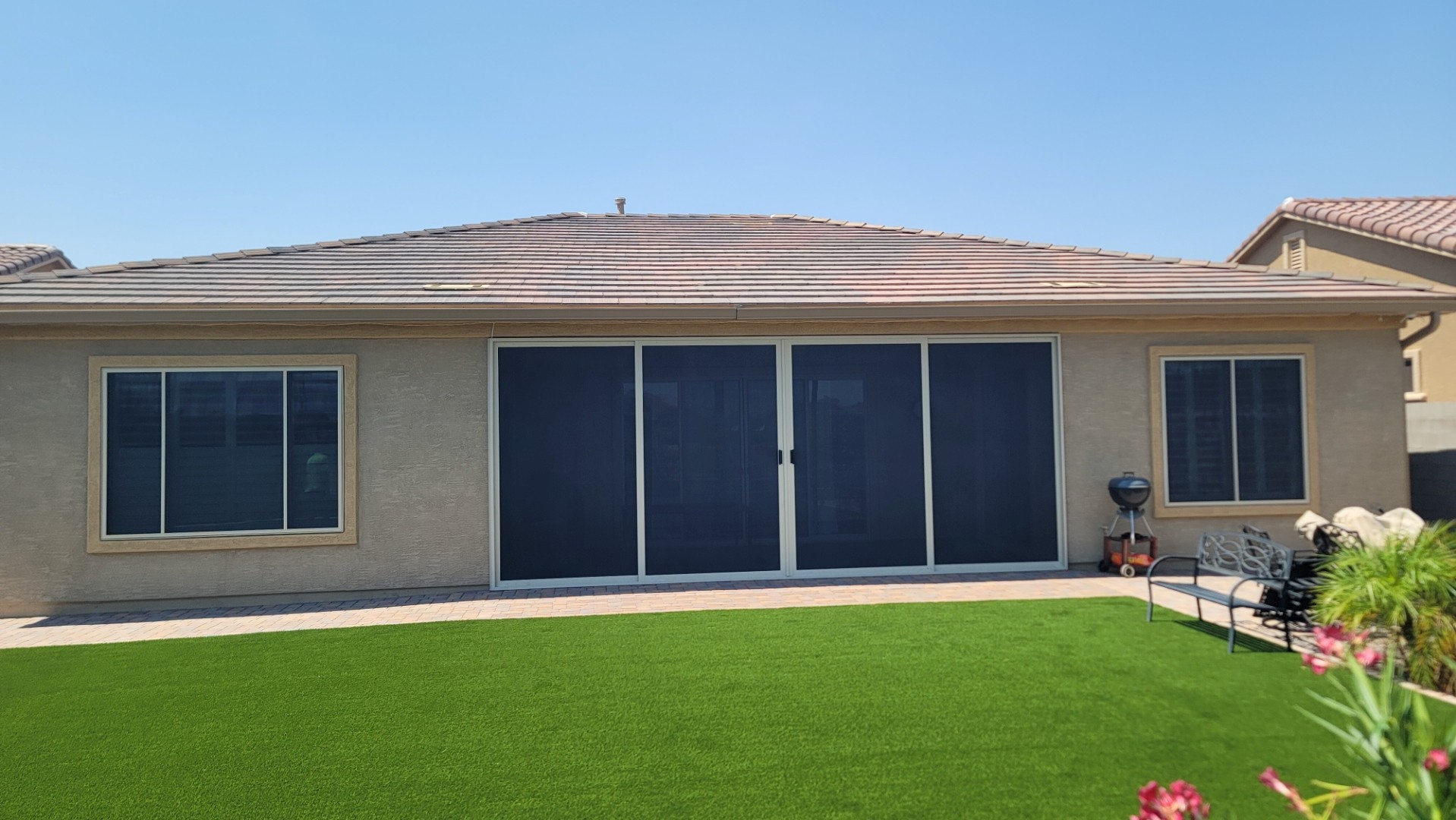
Security, not just screening
This is where a Paramount enclosure differs from a standard screen room. A conventional patio screen is insect mesh in a light frame and is not a barrier to anything. Ours uses the same structural mesh and welded frame as our doors, so enclosing the patio genuinely moves your secure boundary outward rather than just adding a bug screen.
That matters most on homes where the back of the property is out of sight. A block wall and a gate stop nobody who is willing to climb, and once someone is on the patio they are working unseen. The background on the whole approach is in patio enclosure security screens in Arizona.
Worth knowing before you quote
An enclosure and a set of door screens solve overlapping problems. If the patio gets enclosed, the slider behind it is no longer the outer boundary, which sometimes changes what you need on the doors themselves. It is worth having both looked at on the same visit so you are not paying twice for the same protection.

Common questions
Is this the same as a screen room?
No. A standard screen room is insect mesh in a light aluminum frame, built to keep bugs out and nothing else. Ours is 316 marine-grade stainless mesh in a welded, powder-coated frame, so it functions as a security barrier as well as a screen.
Do I need an existing patio cover?
For most enclosures, yes. We screen between existing posts and under an existing roof. If the space is not already covered, that structural work comes first and is a separate trade, and we will tell you that on the estimate rather than after.
Will my HOA allow a patio enclosure?
Rear patios are rarely an issue since they are not visible from the street. Front courtyards get more scrutiny, and that is usually about color and frame profile, both of which we can match. See HOA approved security screens in Arizona.
Can I still get a door into the yard?
Yes, and every enclosure includes at least one. It is built as a proper security door with a latch, not a screen flap, so the enclosure stays a closed boundary when you are not using it.
How is an enclosure priced?
By the opening, not by the square foot of patio. Bay count, post spacing and how many doors you want are what move the number. There is no honest way to quote one without measuring it, though the Phoenix security screen cost guide will give you the right ballpark for the rest of the house.
Free On-Site Enclosure Measure and Quote
We walk the patio, measure every bay, and leave you a written quote. No pressure and no expiring prices. Serving the entire Phoenix metro.
Call us: (602) 214-7005 | Licensed, Bonded & Insured | ROC #353818 | Serving the Valley since 2010